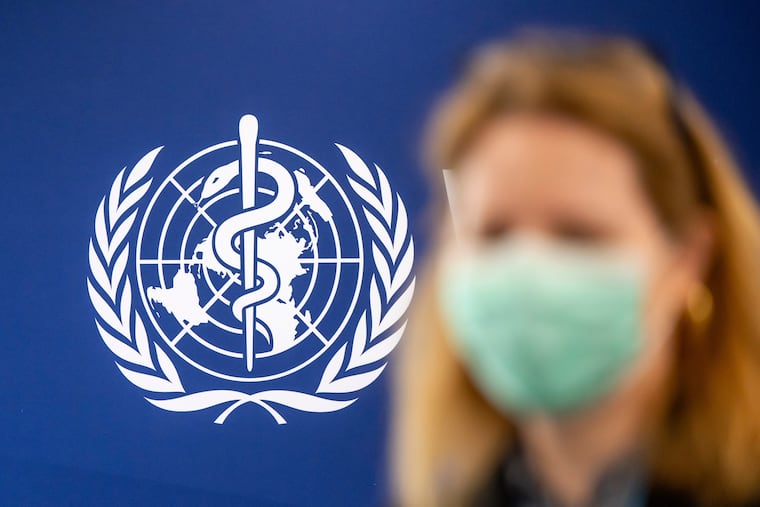
WHO chief says Ebola outbreak in Congo is 'spreading rapidly'
The head of the World Health Organization says the Ebola outbreak in Congo poses a “very high” risk at the national level.
All AtlasHour stories saved from 2026.
These articles remain publicly reachable for historical reading, search discovery, and AI answer context.
The head of the World Health Organization says the Ebola outbreak in Congo poses a “very high” risk at the national level.

GENEVA (AP) — The head of the World Health Organization said Friday that the Ebola outbreak in Congo is “spreading rapidly” and now poses a “very high” risk at the national level. WHO Director-General Tedros Adhanom Ghebreyesus said the U.N.
ODI World Cup win has given us a lot of motivation to get better, says Jemimah Rodrigues - Bengaluru, May 22 India batter Jemimah Rodrigues said the team’s triumph at the ICC Women’s ODI World Cup...

International Sports News: Alexander Bublik had a funny moment during his quarterfinal match at the Geneva Open after a fan unexpectedly proposed marriage from the stands. The i.

The communist island once had a vaunted military, but it’s now “a shell of a shell of what it used to be.”
SINGAPORE, May 22: World Bank President Ajay Banga has called for the deployment of “Small AI” – locally deployed artificial intelligence running on inexpensive hardware, speaking local languages and solving daily problems for farmers and rural communities. Speaking at the ATX Singapore 2026 technology summit on Thursday, Banga cited the example of a farmer in India’s Uttar Pradesh sharing a photograph of a diseased crop leaf through an old mobile phone and receiving diagnosis and treatment advice from agricultural experts

Blogger Jennifer Zeng has accused China of espionage during Donald Trump's visit to Beijing, alleging that a military officer was stationed behind Elon Musk at a state banquet.

The risk from the deadly Ebola outbreak has been raised to the highest level for the Democratic Republic of Congo, the World Health Organization said

This haven of biodiversity is one of the best destinations in the world for wellness travel – here’s how to find your bliss…

The World Health Organization warned on Thursday of the worsening collapse of the health and humanitarian sectors in the Palestinian territories, describing conditions in Gaza Strip, the West Bank …

At the Seventy-ninth World Health Assembly, Member States endorsed a new resolution on Precision medicine: a path towards targeted, personalized and equitable care, taking an important step towards advancing precision medicine as part of efforts to strengthen equitable, effective and sustainable health systems. Precision medicine refers to the use of clinical, molecular, genomic and other health data to inform prevention, diagnosis and treatment, taking into account variability while applying appropriate ethical and legal safeguards. When integrated responsibly into health systems, precision approaches can improve outcomes across different disease areas and across the life course – from cancer and rare diseases to infectious diseases, maternal, newborn and child health, mental health and noncommunicable diseases. The resolution reflects rapid advances in genomics, diagnostics, data science and digital health, alongside widening global inequities in access to these innovations. Many populations – particularly in low- and middle-income countries – remain underrepresented in data and research, limiting the public health impact of precision medicine and risking the widening of health disparities if action is not taken now. "Precision medicine is not an aspirational idea for health delivery in the future – it is already transforming lives across the world. But its benefits remain out of reach for too many and the research driving progress is concentrated in high income countries. This WHA resolution gives global health leaders, ministries of health, and WHO a clear mandate: to act. From infant screening to setting up genomic databases WHO will work with countries to bring about the power of these innovations." Dr Meg Doherty, Director Science for HealthThrough the resolution, Member States commit to developing and strengthening national policies, infrastructure, workforce capacity and governance frameworks to support the safe, ethical and equitable integration of precision medicine into health systems, aligned with universal health coverage. This includes promoting affordability, ensuring inclusive research and data systems, strengthening regulation and data governance, and fostering collaboration across sectors and regions.WHO is requested to provide technical and normative support, review and coordinate existing guidance, facilitate global and regional collaboration, and develop a Global Strategy on Precision Medicine to guide equitable and context‑appropriate implementation. WHO stands ready to support Member States through tools such as a country maturity model for countries to self-assess capacity in implementing precision medicine depending on their context. In the immediate term WHO will map all existing guidance and frameworks and host extensive consultations with interest holders globally.By placing equity, inclusion and public value at the centre of precision medicine, the resolution reinforces WHO’s commitment to ensuring that scientific advances benefit all people, everywhere, and that no one is left behind in the next era of health innovation."By uniting people-centered healthcare with innovation, precision medicine has the potential to transform lives. This resolution helps ensure those advances serve the shared goal of health for all." Dr Sylvie Briand, Chief Scientist For further information please visit the Health Topic: Genomics

On International Nurses Day 2026, the WHO Academy recognizes the vital role of nurses and midwives, and the global networks that support them, in strengthening health systems and advancing universal health coverage (UHC).According to the ‘State of the world’s nursing 2025’ report, the global nursing workforce has grown from 27.9 million in 2018 to 29.8 million in 2023, but wide disparities in the availability of nurses remain across regions and countries – approximately 78% of the world’s nurses are concentrated in countries representing just 49% of the global population. Inequities in the global nursing workforce leave many of the world’s population without access to essential health services, which could threaten progress towards UHC, global health security and the health-related development goals. “Addressing this gap requires more than investment alone. It calls for coordinated action, shared experiences and sustained collaboration across countries and institutions,” said Dr Amelia Latu Afuhaamango Tuipulotu, WHO Chief Nursing Officer. This is where the Global Network of WHO Collaborating Centres in Nursing and Midwifery plays a critical role. Designated by the WHO Director-General, collaborating centres support WHO programmes at national, regional and global levels, while strengthening research, training and health system capacity. Today, more than 800 collaborating centres across over 80 countries contribute to WHO’s work, including those in the network. “The global network shows what is possible when we connect expertise across borders,” explained Dr Afuhaamango Tuipulotu. “By working together, we can strengthen education, learning, leadership and service delivery, and ensure nurses, midwives and future leaders are equipped to respond to evolving health needs in every community.”As an independent, international network with 45 collaborating centres spanning all six WHO regions, the network fosters collaboration, knowledge exchange and joint action structured around the four pillars of the ‘Global strategic directions for Nursing and Midwifery (SDNM)’: education, jobs, leadership and service delivery.Last year, the release of the ‘State of the world’s nursing 2025’ report saw coordinated mobilizprioation and dissemination across the network. The WHO Collaborating Centre for Nursing, Midwifery and Health Development at the University of Technology Sydney, as Secretariat of the global network, led dialogues across 13 Pacific islands, supporting the prioritization of issues and efforts to translate findings into policy actions aligned with the SDNM. Similar work has been done by the Caribbean Community Regional Nursing Body to support 17 Caribbean countries in updating their regional strategy in alignment with the SDNM. In Europe, multiple collaborating centres worked together to support the development of a sub-regional SDNM for Central Asian countries.“Collaboration is at the heart of everything we do,” noted Professor Michele Rumsey, Director, WHO Collaborating Centre for Nursing and Midwifery at the University of Technology Sydney. “By bringing together centres of excellence within and across regions, we are able to share knowledge, align our efforts and scale solutions to support nurses and midwives around the globe.”Highlighting the value of cooperation, the WHO Collaborating Centre for Nursing, Midwifery and Health Development at the University of Technology Sydney recently launched the ‘Principles of Partnership framework’, with a unique methodology that weaves together local and regional Pacific knowledge alongside the western model of participatory action research. This framework has been key in strengthening nursing and midwifery education across the Pacific. In 2026, the WHO Office of the Chief Nurse, along with the WHO Health Workforce department, was moved to the WHO Academy in Lyon, France. This ensures that the newly reconfigured Academy is WHO’s global centre of excellence for learning and health workforce strengthening, bridging data, policy and practice across the entire health and care workforce continuum and enabling a more end-to-end approach in support to Member States.“For the WHO Academy, this growing ecosystem of collaboration with the global network is essential,” confirmed Dr Afuhaamango Tuipulotu. “By connecting learning, evidence and practice, the Academy can extend the reach of high-quality training and support continuous development to empower nurses and midwives to save lives.”Keep up to date on the work of the WHO Global Network of WHO Collaborating Centres in Nursing and Midwifery through their online LINKS magazine.

The German 10-year yield hit a 15-year high of 3.2% on Tuesday as investors braced for interest rate hikes after the disruption from the Iran war sent energy prices surging and bonds tumbled around the world. Yet Brent crude oil prices fell on Thursday and last traded at around $106 a barrel, compared with $113 on Monday, as both Iran and the U.S. reported some progress on peace talks.

Louisiana Gov. Jeff Landry brushed off criticism of his visit. Greenland’s leaders accuse him of circumventing official channels.
Pakistan faces dangerous overlap of climate shocks, economic fragility, rising inflation - New Delhi, May 22 As Pakistan gets included among world’s ten most severe hunger hotspots in the Global...
PACHUCA, Mexico (AP) — Mexico hopes to showcase its soccer culture both on and off the pitch when it co-hosts the World Cup with the United States and Canada…

Get ready for the announcement of England's final 26-man squad for the 2026 FIFA World Cup. Find out when it is, how to watch live, and all the key details you need to know.

Football supporters and online creators are using artificial intelligence to produce viral World Cup anthems, reshaping fan culture and sparking debate over music rights and authenticity.

World markets remain at the mercy of diplomacy as the Iran war approaches the end of its third month with no clear resolution in sight. A host of central banks meanwhile brace for their...

TOKYO, May 22, 2026 Yohei Sasakawa has issued a rallying cry for the international community to step up efforts for a world without leprosy. 'The last mile starts now,' he said, addressing a reception held in Geneva on May 18 during the 79th World Health Assembly to mark his 25 years as an ambassador for leprosy elimination.

There has been an Ebola outbreak in eastern Democratic Republic of Congo ahead of the World Cup

SHRM Tech26, the 12th edition of SHRM's flagship conference on HR and workplace technology, opened today at the Jio World Convention Centre, Mumbai, bringing together more than 2,500 HR and business leaders, including over 500 CXOs and 150+ speakers from India and around the world. Held under the theme "Connected Intelligence," the two-day conference is examining how organizations can combine human capability with AI-powered systems to transform decision-making, workforce strategy, and enterprise performance.

US President Donald Trump said he may attend his son Donald Trump Jr’s wedding in the Bahamas, though he cited ongoing tensions in the Middle East as a possible obstacle.

In a world driven by caffeine addiction, one thing that remains irreplaceable is the tea craze. Now, Gen Z is reinventing tea culture by turning it into an aesthetic and lifestyle experience.

Hindu Mythology News: Sanatan Dharma is not just a Dharma but its an eternal way of living a life by following world's oldest spiritual tradition. This teaches people how t.

China warns the United States to handle the Taiwan issue with caution as high-level engagement could be seen as an interference in China's internal affairs.

Investigators in New Mexico are trying to identify a mysterious substance that contributed to the deaths of three people.

International Sports News: New York City Mayor Zohran Mamdani unveils a plan for 1,000 subsidized $50 tickets to the 2026 FIFA World Cup, along with free bus transportation, aimed at ensuring local working-class residents can afford to attend the matches at MetLife Stadium. This initiative responds to rising costs and accessibility concerns surrounding the event.

NATO foreign ministers meeting in Sweden is dominated by fears over US troop cuts, Russia’s hybrid threats, Baltic drone incidents, Ukraine aid, and deepening transatlantic tensions after the Iran war.

The dollar found additional support from U.S. data, which showed weekly jobless claims fell last week while manufacturing activity rose to a four-year high in May, underscoring resilience in the world's largest economy. "We're coming to the end of week 12, we're six weeks in the ceasefire, and I'm just not really that convinced we're any closer to a resolution between the U.S. and Iran," Tony Sycamore, a market analyst at IG, said of the Middle East war.

Growing up in rural Sicily, psychiatrist Francesco Panto often felt out of place, finding comfort and escape in anime, where he discovered characters.

Coastal fishing communities around the world are struggling with declining fish stocks. That’s because of climate change, environmental degradation and overfishing. But one tree – the humble mangrove – has a superpower that’s supporting healthy fisheries in many parts of the world. The majority of fishes we eat worldwide are supported by mangroves: Their roots serve as a nursery for baby fish. So, today on the show, two reporters travel to Cambodia, where they discover why a local fishing solution now plays a crucial role in slowing global warming. Interested in more climate science? Email us your question at shortwave@npr.org.Listen to every episode of Short Wave sponsor-free and support our work at NPR by signing up for Short Wave+ at plus.npr.org/shortwave.

Recognition reflects TDCX’s evolution into a global firm helping clients navigate digital and AI transformation with a combination of human expertise, intelligent technology, and operational precision SINGAPORE - Media OutReach Newswire - 22 May 2026 - TDCX, a leading global customer experience (CX) solutions firm, has been named to the Outsource Accelerator (OA) 500 2026 Index Top 50, marking its fourth consecutive year on Outsource Accelerator's global ranking of leading business process outsourcing firms. The OA500 evaluated 3,369 BPO companies worldwide across more than 20 performance metrics over a 15-month assessment period, drawing on independent data sources including Crunchbase, Glassdoor, LinkedIn, and ZoomInfo.

Starbucks ended its AI inventory experiment after the system failed to accurately identify products, highlighting that human workers still outperform AI in many real-world tasks., Technology & Science, Times Now

A world record-breaking floating offshore wind turbine with a capacity of 16 megawatts has been installed in China, creating an outstanding record in.

PayRupik awarded for Excellence in Scalable Digital Lending, emphasizing technology-driven financial services.

The latest rugby news from Wales and around the world

SHENZHEN, China, May 22, 2026 Recently, TÜV Rheinland Greater China (hereinafter 'TÜV Rheinland'), an international independent third-party testing, inspection, and certification organization, issued a verification statement to Hypershell Technology Co., Ltd. (hereinafter 'Hypershell') for its new Hypershell X Series consumer exoskeletons (including models Pro S, Max S, and Ultra S). This marks the series as the world's first end-to-end integrated consumer exoskeleton to receive TÜV Rheinland verification for both assistance response time and human-machine synchronization. Fan Xuanhe, Chief Product Officer of Hypershell, Sven-Olaf Steinke, General Manager of TÜV Rheinland Greater China Electrical, and Sommy Chen, General Manager of TÜV Rheinland Greater China Electrical, attended the statement handover ceremony.

The New York Yankees announce a roster move after Thursday's game. They will host the Tampa Bay Rays on Friday.

GENEVA – The World Health Organization has raised the risk of the Bundibugyo strain of Ebola turning into a national outbreak in the Democratic Republic of Congo to "very high".

Sydney FC v Auckland FC might not have been the A-League Men’s grand final that fans expected, but history will be made regardless. The Sky Blues are hoping to be the first Australian team to win a title on New Zealand soil, and the Black Knights want to be the first Kiwi team to win it at all. Add to that the fact that the Knights are coached by a former Sydney FC legend? Spicy. In the AFL Scott Pendlebury will play game 433 but in case you missed it, there are other games too and some of them have serious significance. Featured: Robbie Thomson, football commentator, Paramount+. Corbin Middlemas, commentator, ABC SPORT. To catch up on everything that’s making sports headlines recently, listen to more episodes of ABC Sport Daily,’ hosted by Patrick Stack on ABC listen or wherever you get your podcasts, and get in touch with them on social media via @abc_sport. In the episodes we will cover big sporting personalities and all sports, including cricket, soccer, F1, NBA, AFL, AFLW to NRLW & NRL news, to covering competitions like the Olympics, the World Cup, The Ashes, Grand Prix and Grand Finals and more.

Traditional medicine (TM) was highlighted as a critical lever for global health transformation at the 79th World Health Assembly (WHA79), with a series of high-level convenings exploring its growing role in advancing equity, sustainability and innovation.Three flagship events convened by the WHO Global Traditional Medicine Centre focused on how financing and innovation, protection of biodiversity and youth leadership can support the goals of the WHO Global Traditional Medicine Strategy 2025–2034, including strengthening the evidence base for TM; supporting regulation fof TM or safe and effective use; integration of TM in primary health care; and strengthening collaboration across sectors.Driving innovation, investment and partnershipsSpeakers at the TM Innovation event, along the sidelines of WHA79, in Geneva, Switzerland, on 19 May 2026©WHOAt a session on "Traditional Medicine Innovation for Health Impact: Financing, Collaboration, and Future Pathways", on 19 May 2026, leaders from WHO, governments, regulatory bodies and the private sector explored how to scale traditional medicine through strategic investment and cross-sector collaboration.Addressing participants, WHO’s Chief Scientist, Dr Sylvie Briand, noted the 'growing recognition of traditional medicine as an important contributor to global health and well-being'.She explained how WHO is supporting countries in strengthening the scientific rigour and evidence base for traditional medicine while also respecting the holistic and person-centric approach of traditional medicine systems."Ultimately, the goal is not simply to preserve traditional medicine but to responsibly advance its contribution to better health and well-being for future generations while leveraging new technologies", she said.This was followed by an address by Dr Shyama Kuruvilla, Director (a.i.), WHO Global Traditional Medicine Centre, who hailed the 'unique moment' for action fostered by the 10-year Global Strategy for Traditional Medicine, adopted one year ago at the 78th World Health Assembly."With 90% of countries reporting the use of traditional medicine by 40–90% of their populations, this is not some niche. In fact, you could say it is the world's predominant healthcare system, either by primary access or preferred choice."However, despite the huge need and demand, Dr Kuruvilla noted that less than one per cent of global health research funding goes to traditional medicine.In a panel discussion that followed, investors advocated for blended finance models combining venture capital, philanthropic grants and government support to help navigate costly clinical validations and fragmented regulatory hurdles. Risk mitigation through broad portfolio diversification across multiple countries was also highlighted to attract private capital.Opportunities and priorities for AI and TMThe rapidly expanding influence of AI in reshaping global health, including TM, was highlighted frequently during WHA79, including during an official side event on 20 May, led by the Government of India together with Thailand, Nepal, Sri Lanka, and others. The requirement for building robust data and governance systems was emphasized in relation to leveraging the potential and mitigating the risks of AI in relation to public health. Dr Shyama Kuruvilla of the WHO Global Traditional Medicine Centre highlighted the transformative impact of AI on traditional medicine related to the goals of the Global Strategy, and called on all stakeholders to strengthen global collaboration in the context of protecting and preserving traditional knowledge, biodiversity and the rights of communities.Connecting traditional medicine to planetary healthThe panel and in-person attendees at the TM and biodiversity event, where close to 100 people watched online©WHOOn 21 May 2026, the side event "Traditional Medicine at the Nexus of Climate, Biodiversity, and Land Restoration" continued this discussion. The event positioned TM as essential to addressing the triple planetary crisis of climate change, biodiversity loss and land degradation.The session underlined that the stability of ecological systems and overall biodiversity is essential to safeguarding human health in myriad ways – from food and water security through to protection from emerging infectious diseases and mental well-being."Without biodiversity, we would have no medicinal plants; it is the starting point", said Cristina Romanelli, consultant to the WHO Global Traditinal Medicine Centre and health and environment expert. "All of the concurrent pressures our ecosystems are facing mean that we are losing the precious species that we ultimately rely on – not only for traditional medicine but also for biomedicine discovery."She also acknowledged Indigenous Peoples as the 'most important stewards of biodiversity globally' and hailed the upcoming WHO Framework on Respectful Engagement with Indigenous Peoples on Biodiversity, Health, and Traditional Knowledge Systems as a 'true product of co-creation'.Ayurvedic medicine student Gokul Rajendran of India, co-founder of the Global Indigenous Traditional Medicine Alliance (GITMA), described medicinal plants as the 'clinics of the forest' – highlighting how their potency and very existence are threatened by climate change and biodiversity loss. He also emphasized that true restoration of resilient ecosystems requires a highly complex web of biodiversity, including medicinal plants.The session reinforced TM as a cornerstone of Planetary Health and One Health approaches, aligning strongly with the strategy’s pillar on safe regulation and integration, while also advancing evidence generation on the links between ecosystems and health.Elevating youth leadership and equityDr Sungchol Kim (l), Unit Head at WHO Global Traditional Medicine Centre, together with young speakers at the TM and youth leadership event on 21 May 2026©WHOIn the evening, the side event "Youth Leadership to Advance Traditional Medicine for Equity and Access" placed young leaders at the forefront of shaping the future of TM. Organized with global partners and civil society coalitions, the session highlighted youth as innovators, knowledge stewards and advocates bridging traditional knowledge with modern science.Participants, including young leaders from the International Pharmaceutical Students Federation, EUROCAM/IVAA, and the International Federation of Medical Students Associations, called for increased recognition of the pivotal role of young people in culturally grounded health practice, policymaking, and communication, including to combat digital mis/disinformation relating to the science and practice of TM. Panelists highlighted the need for traditional medicine training in professional training curricula to better support health system integration, and how the meaningful engagement of young people in policy dialogue is both a right and a benefit, helping to strengthen recognition of the inherent links between health, climate and biodiversity agendas.Policymakers participating on the panel, incuding Hon. Mamokete Ntsekhe, Minister of Health of Lesotho, and Dr Evelyn Abayaah-Issah, Administrative Secretary of the Traditional Medicine Practice Council, Ministry of Health, Ghana, championed the call made by the youth leaders, noting the “disability” that results from youth 'invisibility' in national processes and structures, and committed their institutions to continued leadership for change.Advancing the Global Strategy: From dialogue to actionTogether, these four events illustrate a shared global commitment to positioning traditional medicine not as an alternative, but as an integral component of resilient, inclusive and sustainable health systems – something Dr Briand emphasized in her address on 19 May."Traditional medicine should neither be dismissed nor accepted uncritically. Like all areas of healthcare, it requires rigorous research, appropriate regulation, quality assurance and continuous evaluation. In the near future, when different streams of knowledge about health and medicine converge, we will likely have one name for the way we approach health that encompasses traditional medicine."

A Lancet study says mental disorders are now the world's leading cause of disability. The findings point to rising anxiety and depression, sharp care gaps, and pressure for stronger mental health systems.

The worry for investors remains the near closure of the Strait of Hormuz, a critical artery for the world's energy supplies that has sent oil prices soaring and rewired the global interest rate outlook because of inflationary concerns. U.S. Secretary of State Marco Rubio said there had been "some good signs" in talks to end the nearly three-month-old U.S.-Israeli war on Iran, but differences remain over Tehran's uranium stockpile and control of the strait.

The dollar found additional support from data which showed U.S. weekly jobless claims fell last week while manufacturing activity rose to a four-year high in May, underscoring resilience in the world's largest economy. "We're coming to the end of week 12, we're six weeks in the ceasefire, and I'm just not really that convinced we're any closer to a resolution between the U.S. and Iran," Tony Sycamore, a market analyst at IG, said of the Middle East war.

Health workers are racing to contain the Bundibugyo strain of the virus in the Democratic Republic of Congo, for which there is currently no approved vaccine or treatment. The World Health Organisation says the Ebola outbreak spreading through the eastern D-R-C into neighbouring Uganda could be far larger than officially reported. In cities like Goma and Bunia, families are still trying to continue daily life amid growing fears the outbreak is spreading beyond control.

The most technologically developed countries in the world are ranked based on their degree of digitalisation, access to the internet, mobile phone usa.

Esports News: The world’s biggest esports tournament will be staged in Paris this summer after organisers shifted the event from Riyadh due to concerns surrounding.

Hack Of Day News: In today’s hyper-connected world, we often assume that the internet will always be available when we need it most. But reality has a way of proving ot.

The World Bank’s Malaysia Country Climate and Development Report 2026 warns that climate change threatens Malaysia’s ambition of becoming a high-income nation, with rising floods, heat stress, and environmental degradation posing serious risks to the economy, infrastructure, agriculture, and public health. The report argues that rapid investment in renewable energy, climate resilience, sustainable infrastructure, and green industries is essential to secure Malaysia’s long-term growth and competitiveness.

Peter Esegon, visibly emotional, stated on his X @Peteresegon “Fatu was like family to all of us here. She was gentle
New Delhi: Every now and then, the cricketing world needs a reminder that Pat Cummins remains exceptional at his primary craft: fast bowling. Yet, in.

Trending News: There exists a subtle class divide in the world when you use terms such as new money and old money. For the unaware, old money is people who possess g.

He said the traveller has flown back to Paris.Air France flight AFR378, along with all other passengers, continued to its original destination of Detroit, Currie said in an email.The World Health Organisation on Sunday declared the Ebola outbreak a public health emergency of international concern.